
Call or Text (614) 769-2390
Columbus, OH 43062
Your local stump grinding experts in Central Ohio
GrindWorks Stump Removal Blog
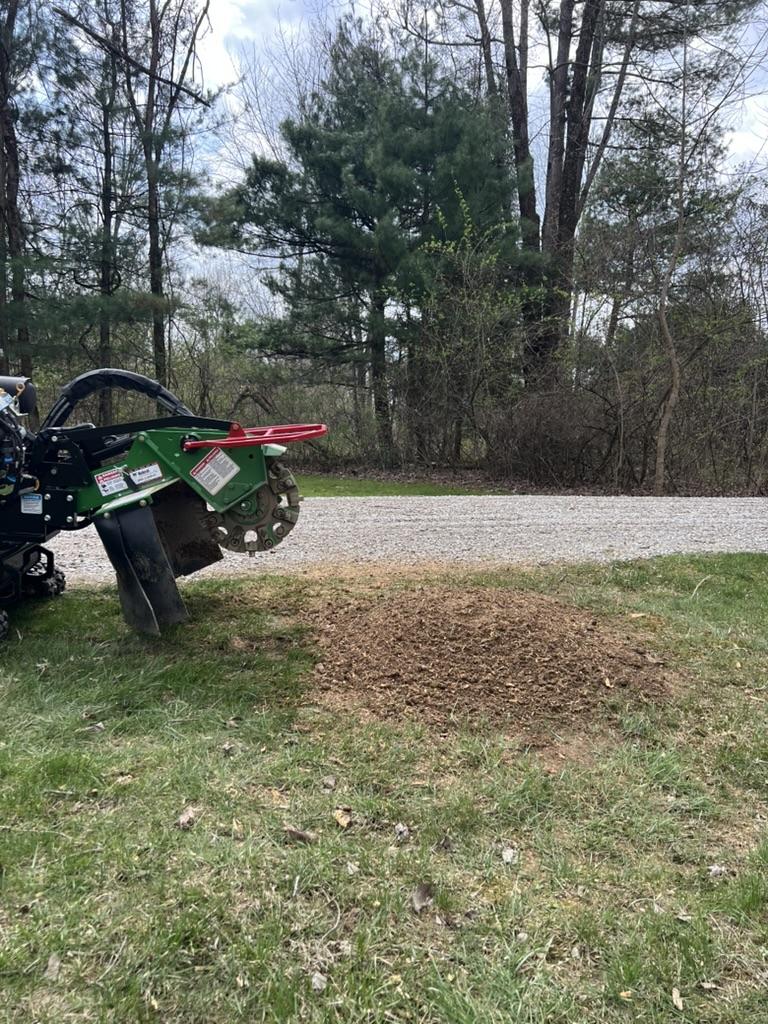
How Does Access Impact Stump Grinding Pricing?
Introduction
Stump size is the first thing most people think about when it comes to pricing, but access often plays just as big a role. A stump that’s easy to reach can be completed quickly. The same stump in a tight backyard, behind a narrow gate, or on uneven ground can take significantly longer.
That difference comes down to how equipment gets to the stump and how the work can actually be carried out. Access affects setup time, machine choice, and overall efficiency, which is why it directly impacts the final price.
Why Access Matters in Stump Grinding
Access affects the job before grinding even begins.
If the stump is in an open area with direct entry, the machine can be unloaded, positioned, and operated without delays. The operator has room to move, adjust angles, and complete the job efficiently.
When access is restricted, the process becomes more involved. Equipment may need to be maneuvered through tight paths or positioned in limited space. The operator may also need to work more carefully around nearby features. These conditions slow the job down and increase the total time required.
What Actually Affects Access on a Property
Access is not one single issue. It’s a combination of physical conditions on the property that determine how the job is handled.
Entry points and clearance
The first consideration is whether the equipment can physically reach the stump.
Narrow gates, tight side yards, and angled pathways can limit what machines can be used. Even when an opening seems wide enough, turns or obstructions can make it difficult to maneuver through. Overhead elements like branches, decks, or structures can also restrict movement.
When access is limited, smaller machines are typically used. They are effective but take longer on larger stumps or wide root systems.
Distance from the drop-off point
The location of the stump relative to where equipment is unloaded affects setup time.
Stumps near the driveway or street are faster to access. Stumps located deeper in a backyard require more time to reach, especially when the route is indirect or includes obstacles. The longer it takes to get equipment into position, the longer the overall job takes.
Ground conditions and terrain
The condition of the ground affects how equipment can move and operate.
Firm, level ground allows efficient setup and movement
Sloped areas require controlled positioning and slower operation
Uneven terrain can make repositioning more difficult
Soft or wet soil may require extra care to avoid surface damage
Mixed surfaces can affect traction and stability
These conditions reduce efficiency and require more careful handling.
Working space around the stump
Once the machine reaches the stump, available space becomes critical.
Open areas allow the operator to move freely and grind the stump consistently. Tight spaces limit positioning and may require the machine to be adjusted multiple times. This is especially noticeable with wider stumps or those with heavy root flare.
Limited working space often increases the time needed to complete the job.
Obstacles and surrounding features
Objects near the stump can affect how the work is performed.
Fences, sheds, patios, and retaining walls can restrict movement
Landscaping features may need to be avoided or protected
Nearby trees or structures can limit working angles
Decorative or finished areas require more precise operation
The more obstacles present, the more careful and time-consuming the process becomes.
Utilities and site hazards
Safety conditions can affect both preparation and execution.
Underground utilities may need to be located or marked
Sprinkler systems, wires, and septic components must be avoided
Work near structures requires controlled operation
Some jobs may need to be scheduled around utility marking
These steps ensure safety but can influence job timing and complexity.
How Access Affects Equipment and Efficiency
Access directly influences what equipment can be used and how efficiently it operates.
In open areas, larger grinders can be used, which complete the job more quickly. In restricted areas, smaller machines are often required. While effective, they take longer on larger stumps or dense wood.
Positioning also matters. If the machine cannot be placed at ideal angles, the operator may need to reposition more often, which slows the grinding process.
How to Evaluate Access Before Requesting a Quote
To get an accurate estimate, it helps to review your property the same way a contractor would.
Measure entry points
Check the width of gates or narrow paths to understand what equipment can fit.Review the access route
Look at the path from the street or driveway to the stump, including distance, slope, and obstacles.Check the area around the stump
Identify nearby structures, landscaping, or features that could limit movement.Take clear photos
Capture the stump, surrounding area, and full access path to provide accurate context.
Providing these details upfront helps ensure the estimate reflects the actual job conditions.
When Access Has the Biggest Impact on Pricing
Access becomes a major factor when multiple limitations are present at the same time.
A stump in an open front yard with direct access is usually straightforward. A stump located behind a narrow gate, across uneven terrain, surrounded by obstacles, and far from the entry point requires more time, more planning, and more careful operation.
Access is always considered alongside other factors such as stump size, root flare, and service type. Together, these determine the final price.
FAQs
Does backyard access always increase the cost?
Not always. If the backyard has wide, direct access and stable ground, the impact may be minimal.
What if my gate is too narrow?
A smaller machine can usually be used, but it may take longer, especially for larger stumps.
Can stump grinding be done on slopes?
Yes, but slopes require more controlled operation, which can affect efficiency.
Do obstacles near the stump affect pricing?
Yes. Limited space and surrounding features can slow the process and require more precise work.
Should I include access details when requesting a quote?
Yes. Providing measurements and photos helps ensure a more accurate estimate.
Conclusion
Access plays a major role in stump grinding pricing because it affects how easily equipment can reach the stump and how efficiently the work can be completed. Entry points, distance, terrain, working space, obstacles, and safety considerations all contribute to the overall effort required.
Providing accurate details about your property helps ensure clear pricing and a smoother process from start to finish.

© 2026 All Rights Reserved | GrindWorks Stump Removal
Website Done By: LocalEyes