
Call or Text (614) 769-2390
Columbus, OH 43062
Your local stump grinding experts in Central Ohio
GrindWorks Stump Removal Blog
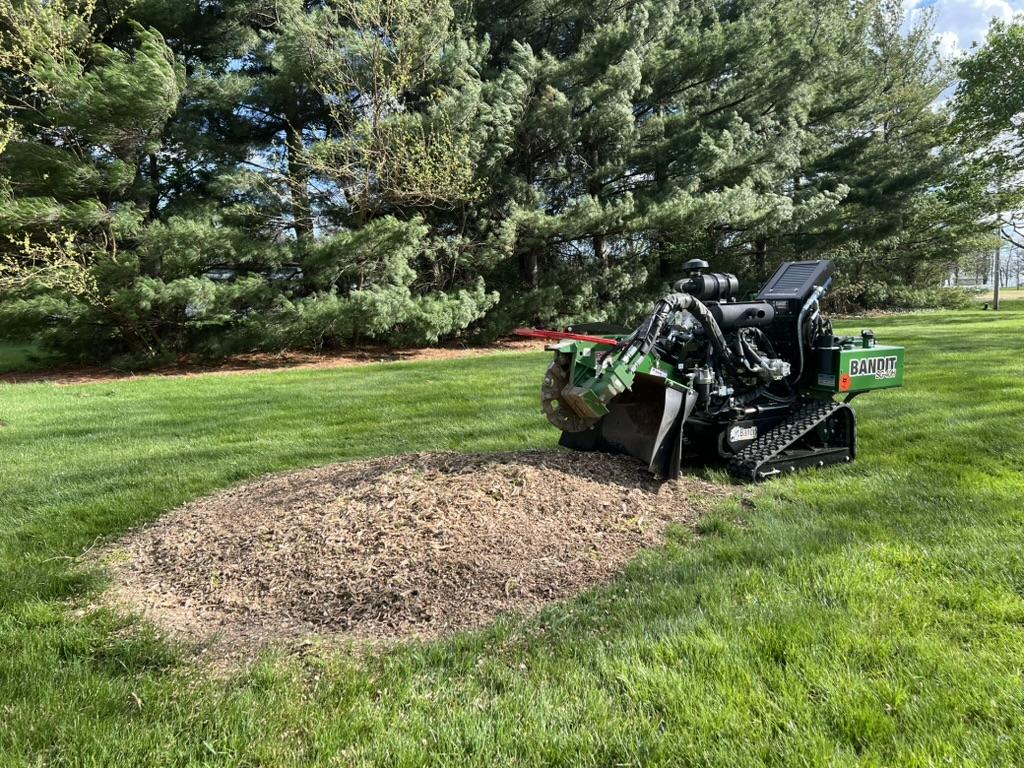
When Does Surface Root Grinding Add to Project Cost?
Introduction
After a stump is ground, the visible stump is gone—but the roots often remain. In some yards, they stay below the surface and aren’t an issue. In others, they show up as raised lines, uneven patches, or areas that interfere with mowing.
That’s where surface root grinding comes in. It’s not always part of standard stump grinding, and whether it adds to cost depends on how much additional work those roots actually create.
What Surface Root Grinding Actually Is
Surface root grinding focuses on roots that are at or near ground level and causing problems. It’s a controlled grinding process to smooth out those areas.
It does not involve:
Digging or excavation
Pulling out entire root systems
Working under concrete, utilities, or structures
Because it extends beyond the stump itself, it’s usually treated as additional work rather than part of the base service.
Why It Adds to Cost in Some Jobs
Surface root grinding doesn’t automatically increase cost—it does so when it expands the scope of the job.
If roots are minimal and close to the stump, the added time is small. The operator is already in position, and the extra work is quick.
When roots extend outward or appear in multiple areas, the job shifts. Instead of grinding one location, the operator has to move, reposition, and treat separate sections. That added movement and time is what increases cost.
What Actually Drives the Cost Increase
Several real conditions determine how much surface root grinding affects pricing. These don’t occur in neat categories—they often overlap.
Root spread and layout
The biggest factor is how far the roots extend.
Roots may stay tight to the stump, or run several feet out
Some yards have one continuous root area
Others have scattered patches across different parts of the property
Separate zones require repositioning the machine multiple times
The more spread out the roots are, the less efficient the job becomes.
Total area that needs to be leveled
There’s a difference between fixing a small section and correcting a larger portion of the yard.
A few raised lines can be handled quickly
Larger uneven sections require repeated passes
Continuous coverage across lawn areas takes noticeably longer
As coverage increases, so does grinding time.
Root size, density, and tree type
Roots are not uniform, even on the same property.
Thin surface roots grind down quickly
Thick roots take longer and require multiple passes
Dense clusters slow down progress
Some tree species leave behind tougher, more compact material
This directly affects how long each section takes.
Depth of the roots
Even “surface” roots vary in depth.
Some sit fully above ground, while others are just beneath the surface but still cause bumps. Reaching those requires slightly deeper grinding, which increases effort and time.
Access to root areas
Surface root grinding is affected by access more than people expect, especially when roots are spread out.
Narrow gates or tight side yards limit machine size
Slopes and uneven terrain slow movement
Obstacles may block direct paths
Some areas require careful maneuvering to reach
If multiple root sections are hard to access, the added time compounds quickly.
Obstacles and surrounding features
Roots often run through parts of the yard that aren’t completely open.
Landscaping features like beds, edging, or decorative areas must be worked around
Fences, trees, or structures can limit positioning
Hard edges like patios or walkways require controlled grinding near boundaries
These conditions don’t just slow the job—they require more precision.
When Surface Root Grinding Is Worth Including
Surface root grinding becomes worth it when the roots are actually affecting how the yard functions.
It’s typically included when:
The ground feels uneven when walking across it
Mowing becomes difficult or inconsistent
The area is being prepared for reseeding or landscaping
Roots are visible across commonly used parts of the yard
If none of those issues are present, it may not be necessary to include it immediately.
How to Get an Accurate Estimate
To price surface root grinding correctly, the full scope needs to be visible upfront.
Start by identifying all problem areas, not just the stump. Then provide:
Photos showing the full spread of roots
Wide shots of the yard layout
Details about access paths and obstacles
If root areas aren’t clearly shown, estimates are often based only on the stump. That’s when pricing changes later—because the actual scope wasn’t defined at the start.
FAQs
Does stump grinding include surface root grinding?
No. Standard stump grinding focuses on the stump itself unless root work is specifically included.
Do all stumps have surface roots that need grinding?
No. Some root systems stay below ground and don’t create issues.
Does more root coverage increase cost?
Yes. The larger and more spread out the root system, the more time the job requires.
Can surface roots be completely removed?
They can be ground down to improve the surface, but deeper roots remain underground.
Will grinding roots damage the lawn?
Some surface disturbance can occur in the areas being worked on, especially if roots are widespread.
Conclusion
Surface root grinding adds to project cost when it increases the amount of work beyond the stump itself. The key factors are how far the roots extend, how much area needs to be corrected, and how accessible those areas are.
It’s not about whether roots exist—it’s about how much additional effort they create. Once that’s clear, it’s easier to decide whether including surface root grinding makes sense for your project.

© 2026 All Rights Reserved | GrindWorks Stump Removal
Website Done By: LocalEyes