
Call or Text (614) 769-2390
Columbus, OH 43062
Your local stump grinding experts in Central Ohio
GrindWorks Stump Removal Blog
Do You Need to Remove Mulch After Stump Grinding?
Introduction
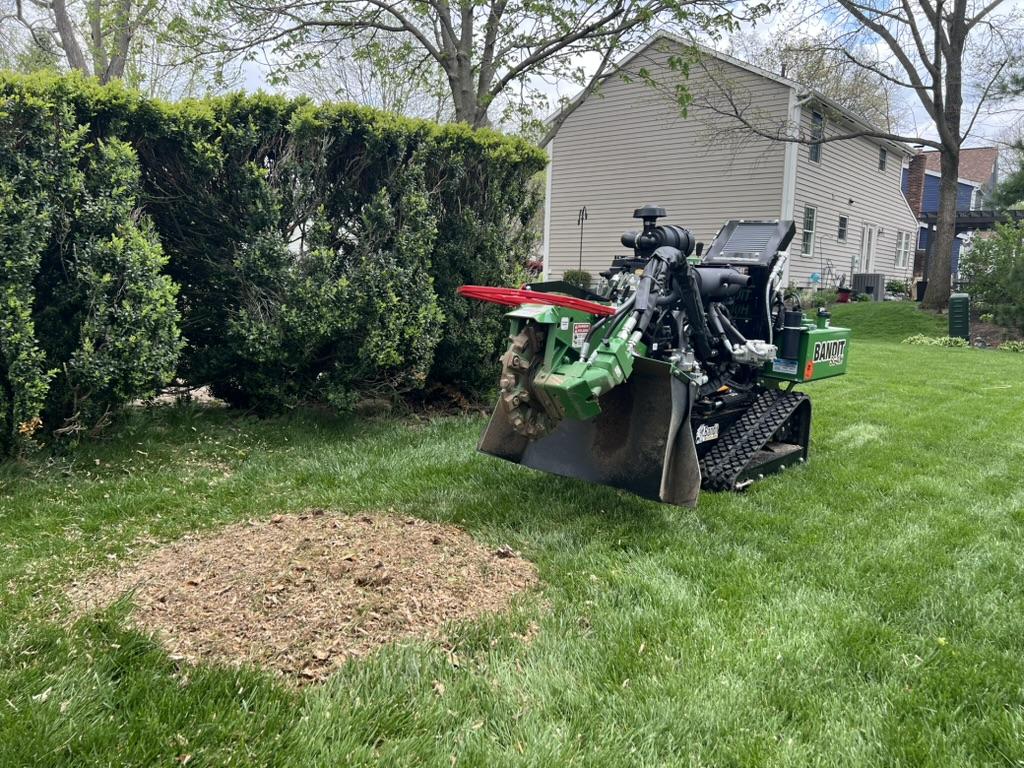
After a stump is ground, what’s left behind is a pile or layer of wood chips where the stump used to be. For some homeowners, that’s useful material. For others, it feels like unfinished work.
So the question becomes simple: do you actually need to remove it?
The answer depends on what you plan to do with the area next. In many cases, the mulch can stay. In others, removing at least part of it makes the space easier to use.
What That Mulch Actually Is
The material left behind isn’t just loose debris—it’s the stump itself, broken down into wood chips during the grinding process.
It usually contains:
Shredded wood from the stump
Pieces of the upper root system
Some soil mixed in from the grinding depth
Because it’s organic material, it will slowly break down over time. But it doesn’t behave the same way as finished landscaping mulch.
When You Don’t Need to Remove It
There are situations where leaving the mulch in place is completely fine.
If the area isn’t being used right away, the mulch can simply remain where it is and decompose naturally. This is often the easiest option and requires no additional work.
It also makes sense to leave it if you plan to reuse it elsewhere in your yard. Many homeowners spread it around trees, garden beds, or other areas where a rough mulch layer is acceptable.
When Removing Mulch Makes More Sense
If you’re planning to actively use the space, leaving all the mulch in place can get in the way.
You’ll usually want to remove at least some of it if:
You’re reseeding or laying new grass
You want the area to be level with the surrounding lawn
You’re installing landscaping or hard features
The mulch pile is too thick or uneven
You prefer a cleaner, finished look right away
In these cases, removing or reducing the mulch makes it easier to work with the area.
What Happens If You Leave It in Place
Leaving the mulch doesn’t cause problems, but it does change how the area behaves.
Over time, you can expect:
The mulch to settle and compact
The ground to shift slightly as material breaks down
Grass growth to be slower if mulch is thick
The surface to remain uneven unless it’s leveled
These changes happen gradually and are part of the natural decomposition process.
How Much Mulch Should You Remove?
You don’t always need to remove everything.
If you’re restoring the area to lawn, the goal is to reduce the mulch enough to allow soil and grass to establish properly. That usually means clearing out the bulk of the wood chips and replacing it with topsoil.
If you’re not planting grass, you may only need to level the pile or move excess material elsewhere.
Options for Handling the Mulch
Once you decide what to do, there are a few practical ways to handle the material.
Leave it in place and let it break down naturally
Spread it thinly across nearby areas
Move it into garden beds as rough mulch
Remove excess material and dispose of it
Have it hauled away as part of the service
The right choice depends on how you want the area to look and function.
Choosing Between Grind & Go and Grind & Haul
This decision is often made before the job even starts.
If you don’t want to deal with mulch at all, having it removed during the service is the simplest option. If you’re okay managing it yourself or reusing it, leaving it behind can save cost.
FAQs
Do I have to remove mulch after stump grinding?
No. It can be left in place if it’s not affecting how you plan to use the area.
Can grass grow over stump grindings?
Yes, but it’s usually better to remove most of the mulch and add soil for stronger growth.
Will the mulch disappear on its own?
It will break down over time, but the process is gradual and can take a while.
Is the mulch good for landscaping?
It can be reused, but it’s rougher than typical store-bought mulch.
Can I remove it later instead of right away?
Yes. Many homeowners leave it initially and deal with it when they’re ready to use the space.
Conclusion
You don’t always need to remove mulch after stump grinding, but whether you should depends on what you want to do next. Leaving it in place works if the area isn’t being used right away. Removing it makes sense if you’re preparing the space for grass, landscaping, or a cleaner finish.
Understanding that difference helps you decide what’s worth doing now and what can wait.

© 2026 All Rights Reserved | GrindWorks Stump Removal
Website Done By: LocalEyes